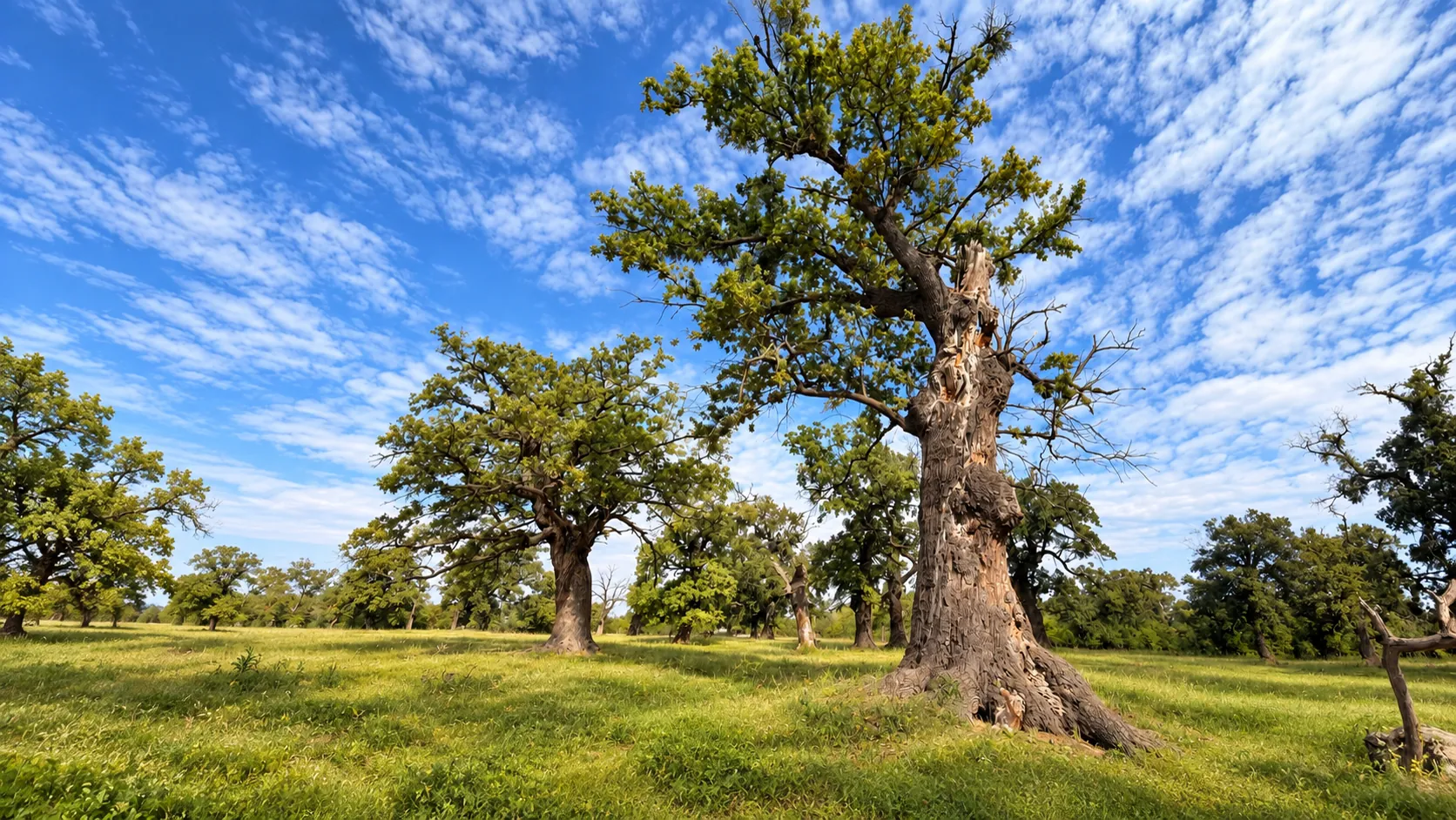
02The Oaks
Time that stands upright.
Pedunculate oak · Quercus robur
Natural Monument · Šalinac, Smederevo
Scroll
44°41′24″ N 21°00′59″ E
168 large pedunculate oaks
on nineteen hectares
They are about two hundred years old — some, by estimate, even older. So many old oaks in one place can hardly be found in Serbia any more.
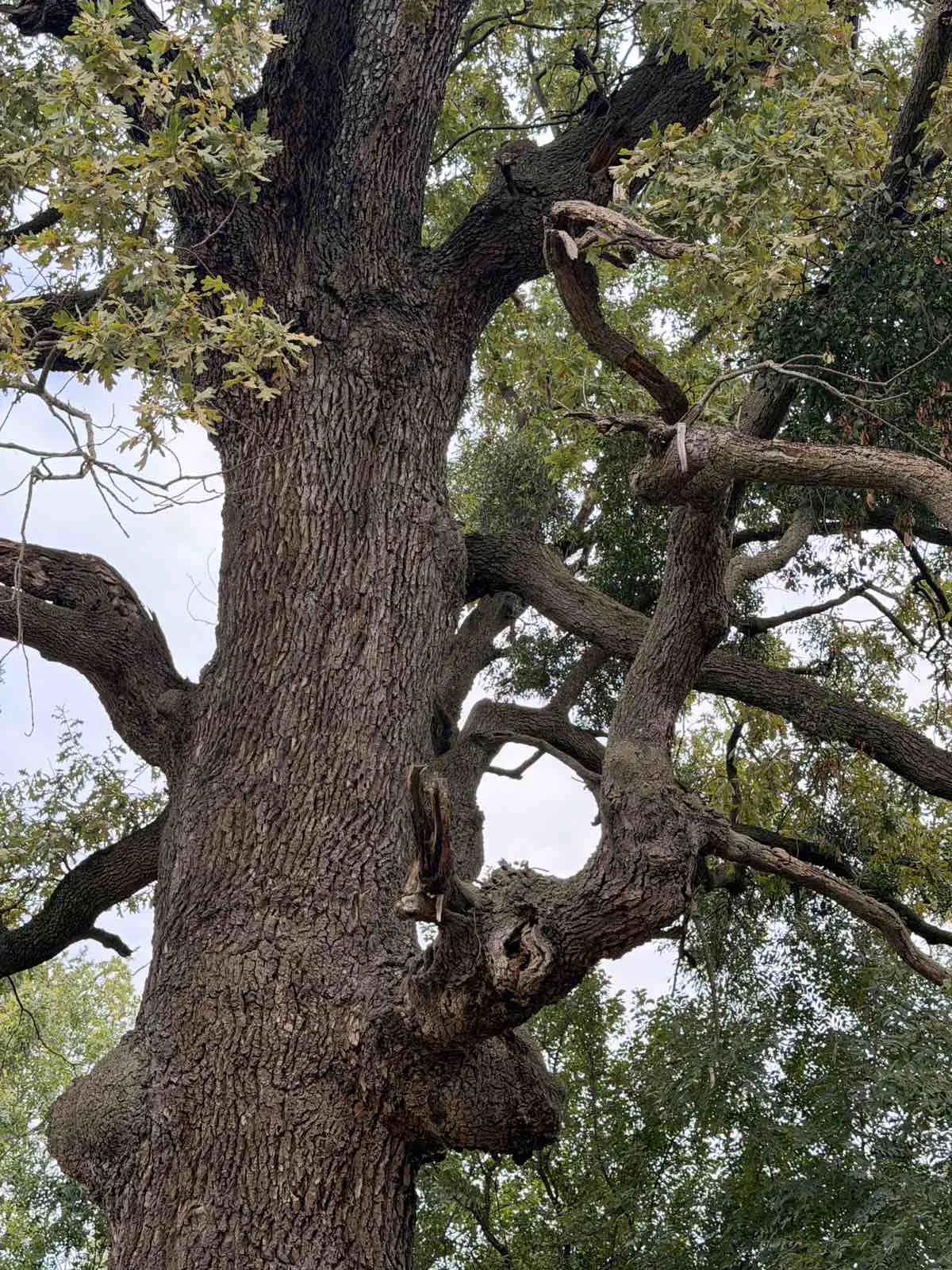
Measured in 1984
From rootto crown.
- 4.14 mtrunk circumference
- 1.32 mtrunk diameter
- 17.58 mheight
- 15.43 mcrown diameter
- The average of all trees. The largest reach more than 25 m in height, and their trunks are wider than two metres.
Dead wood. Living habitat.
A hollow or fallen tree is not the end of the forest. Owls and woodpeckers nest in the cavities, and in the rotting wood live the larvae of the stag beetle and the great capricorn beetle — species also protected by the European Habitats Directive.
Old trees
What remains
when an oak falls.
Old and dead trees are not removed. A fallen tree stays where it fell — and there it goes on feeding the forest.
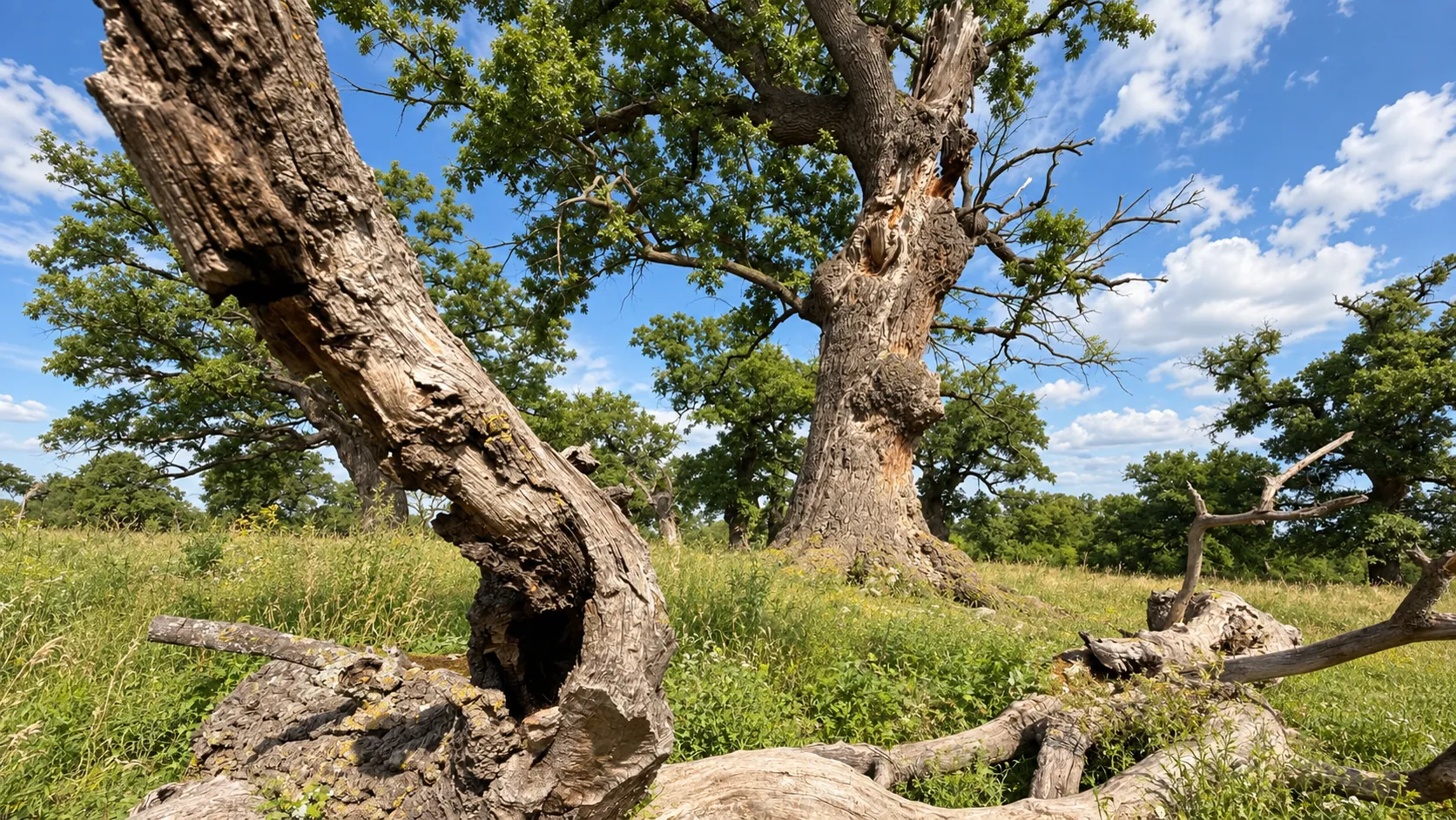
A dead tree stays where it stands.
Female stag beetles lay their eggs in rotting wood.
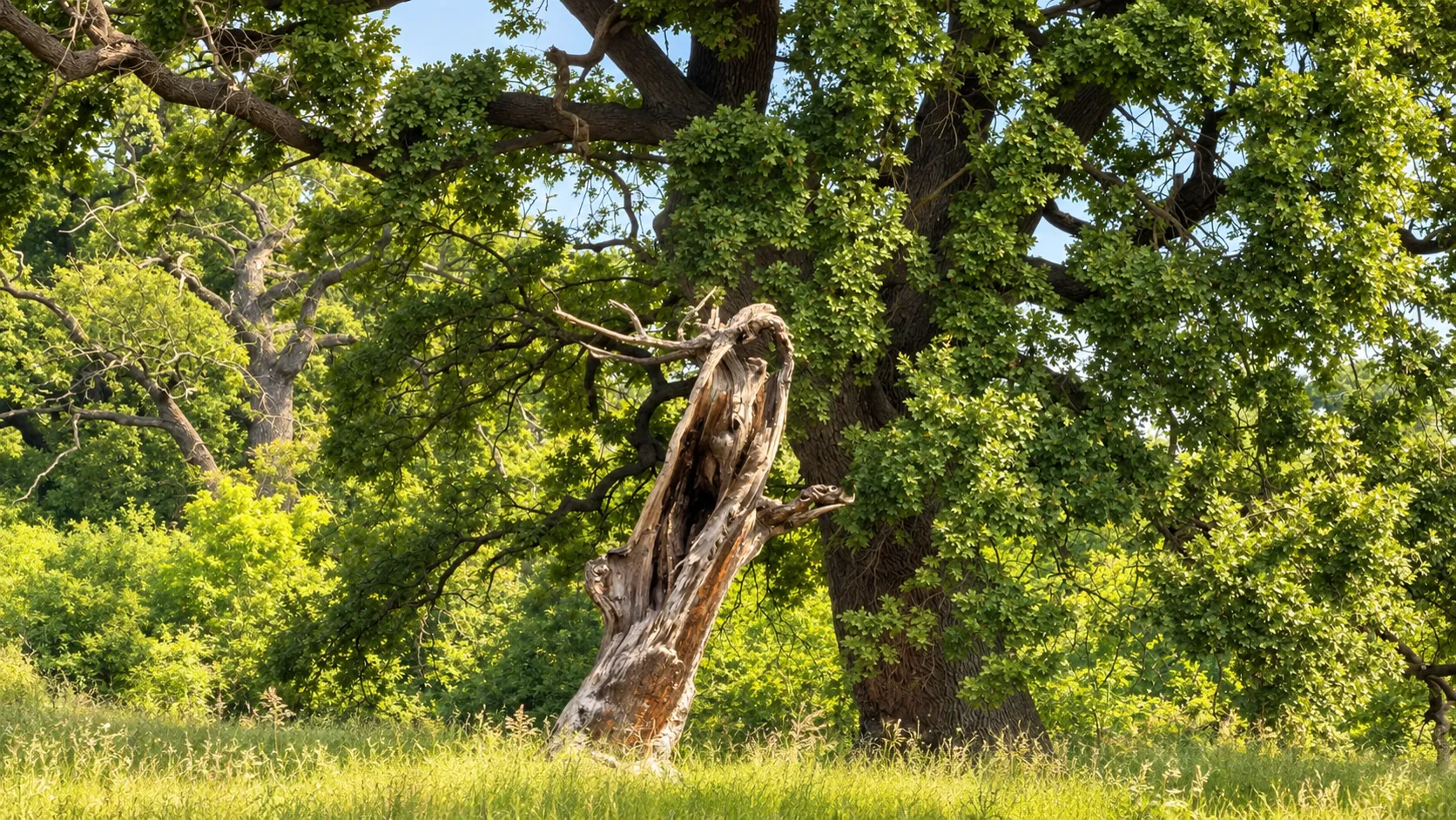
Owls and woodpeckers nest in the cavities.
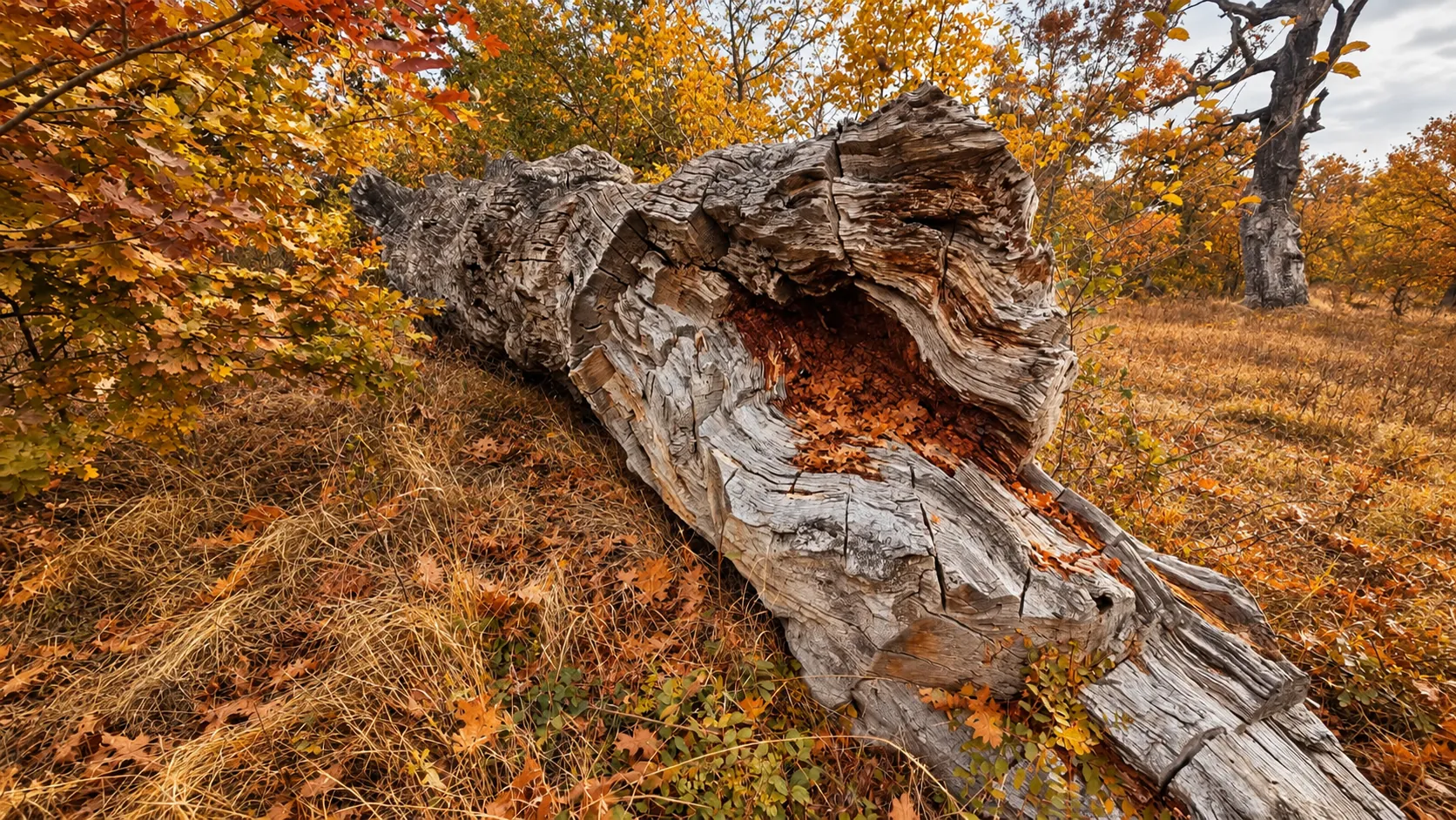
The larva of the great capricorn beetle lives in the wood for four years.
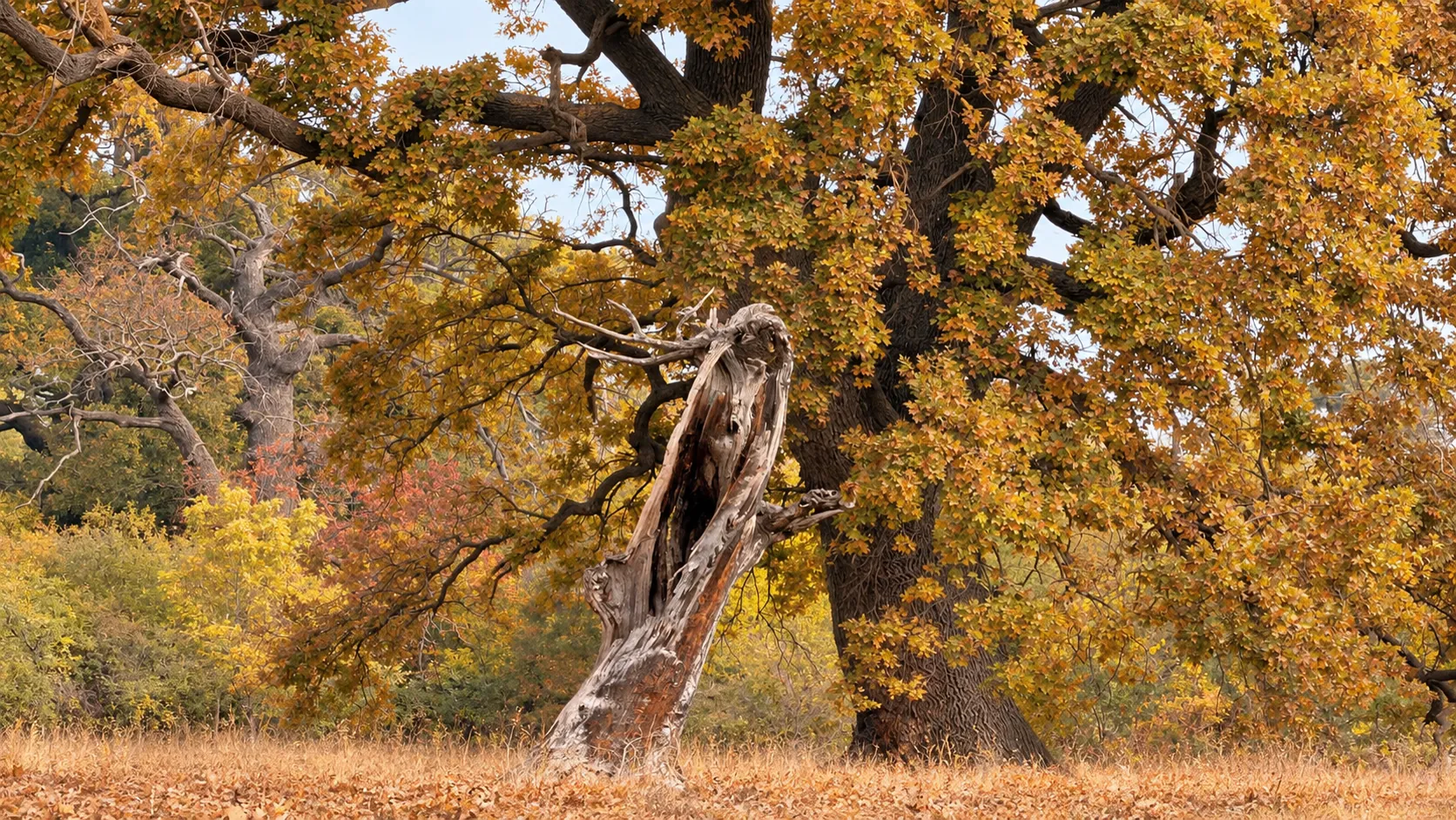
A hollow is somebody’s home.
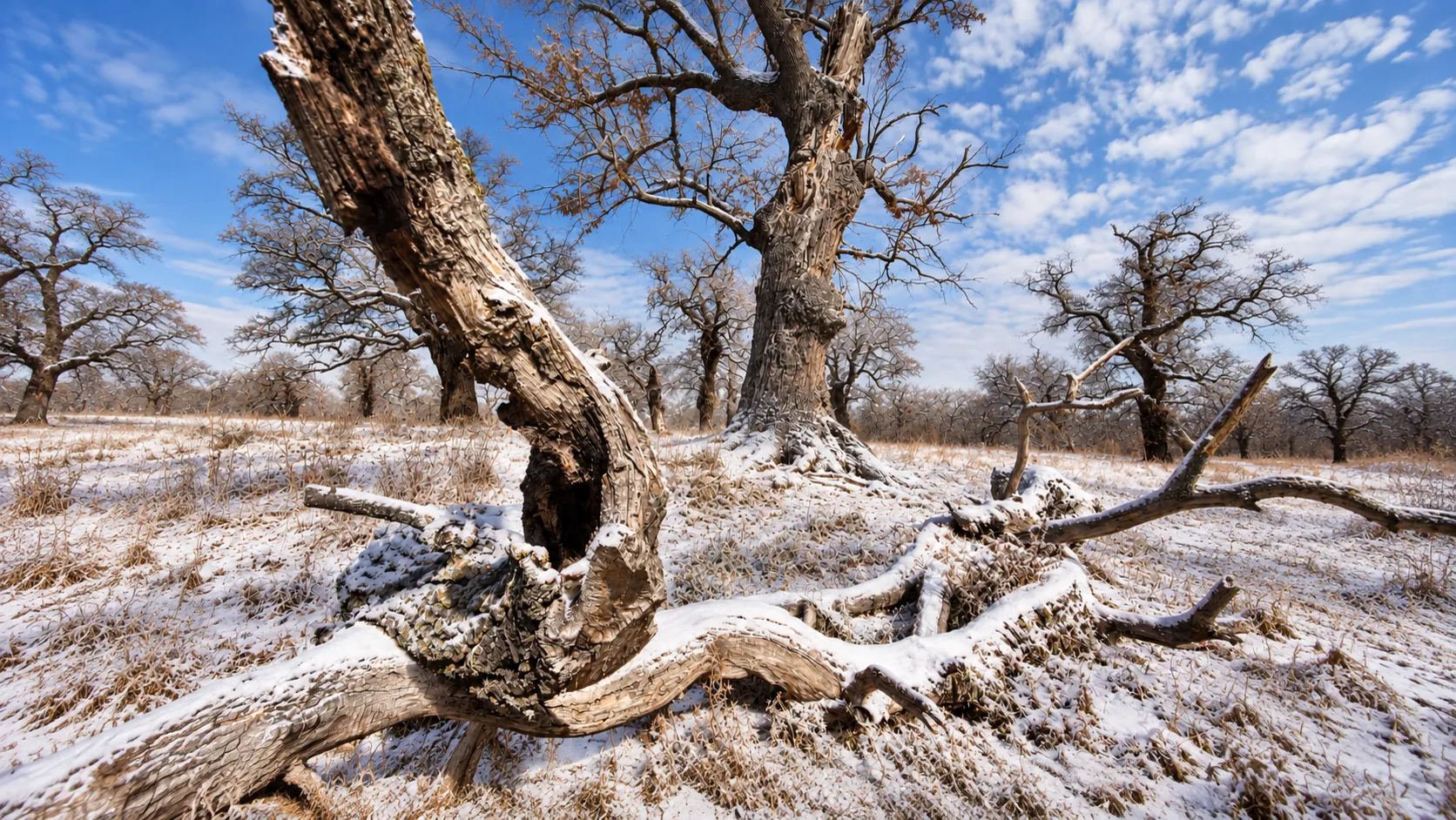
Fallen branches stay where they fell.
An old forest also lives on wood that has stopped growing.
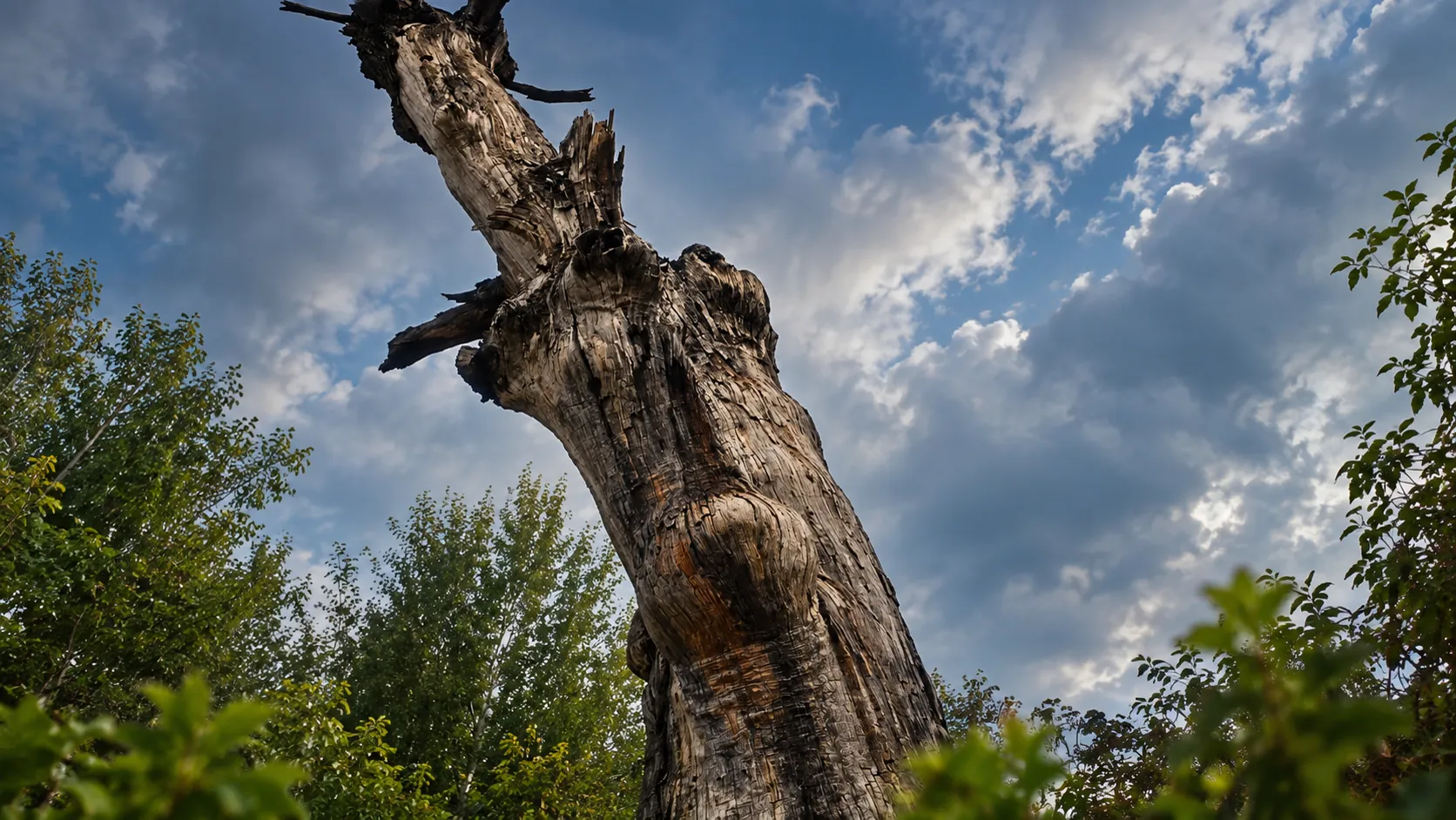
In belief
The lion among trees.
Because of its longevity and hardness, for thousands of years the oak has held the place that the lion holds among animals and the eagle among birds. Oak groves were sacred places; later they became sacred “zapis” trees, and the oak itself the badnjak, the Christmas Eve yule log.
Oak timber was used to build log churches, houses and boats. It was in oak forests that Karađorđe’s insurgents grew up.
03Next chapter
Flora and Fauna
All that lives in the shade of the oaks.
Continue →